The settlement of Iceland began in 874 AD when the Norwegian chieftain, Ingólfr Arnarson, became the first permanent settler on the island. In the following centuries, Norwegians, and to a lesser extent other Scandinavians, emigrated to Iceland, bringing with them thralls (slaves or serfs) of Gaelic origin.
Today was a very full day as we made an eight hour trek around the Golden Circle in a motor coach.
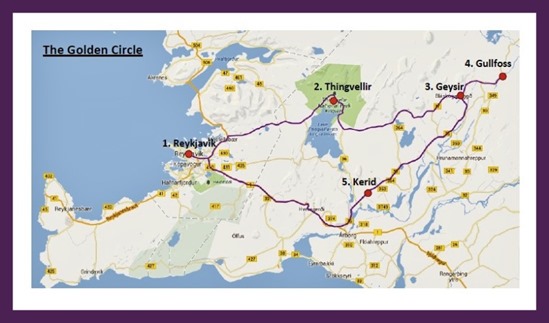
Our first stop at Thingvellir National Park (2), a UNESCO World Heritage Site. This flag marks the location where the 52 chieftains gathered for their first parliamentary proceedings in the summer of 930, which is the official founding of the nation of Iceland.

The continental drift between the North American and Eurasian Plates can be clearly seen in the cracks or faults which traverse the region. This area is part of the North American plate. As we moved east, we were on the Eurasian plate.

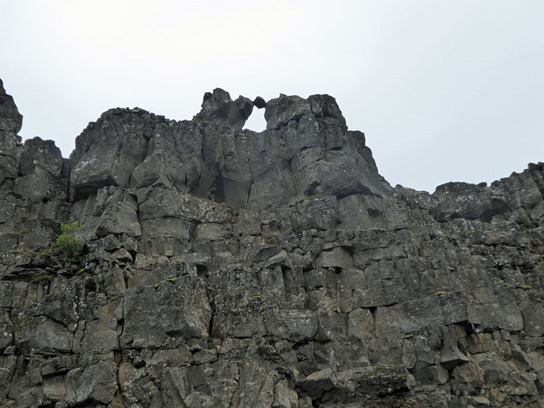
This boulder precariously sits at the top of the ridge. Folklore says if that boulder falls, so does Iceland.
Below is one of the beautiful waterfalls in the park.

Strokkur (3) is a very dependable geyser that erupts every 5 to 10 minutes. There are also more than 40 other smaller hot springs, mud pots and fumaroles nearby.

The Icelandic horse was developed from ponies taken to Iceland by Norse settlers in the 9th and 10th centuries. The Fjord, Exmoor, Scottish Highland, Shetland and Connemara breeds have all been found to be genetically linked to the Icelandic horse; however the breed has now been bred pure in Iceland for more than 1,000 years.

Below is one of the many glaciers that can be found in Iceland.

Gullfoss Waterfalls (4) drops 96 feet into two falls. The haze in the picture is the spray from the falls.

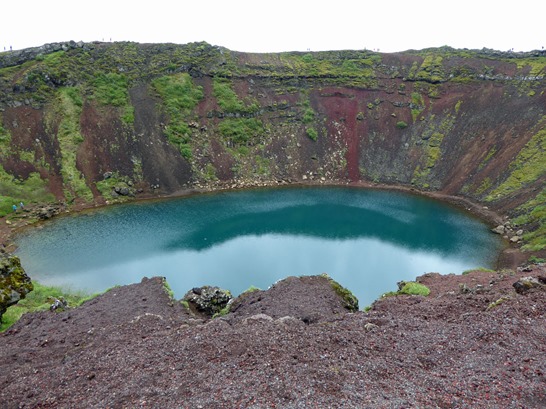
Iceland also has its share of craters. Kerid (5) is a beautiful volcanic crater lake.
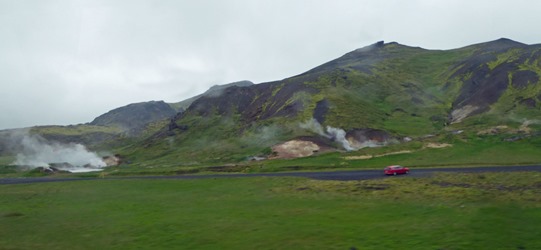
All along our drive, we could see steam from all the geothermal activity, much of which is harnessed to produce electricity.
Lupine was imported from North America in 1945 to combat topsoil loss, which had been a serious problem since the 19th century. Unfortunately, the plant can both prevent other plants from growing and suffocate more delicate flora. Many feel that the lupine has become too aggressive and needs to be stopped,especially to protect the distinctive woolly moss which covers the lava. It sure is beautiful though.

Although it was very overcast most of the day today, we were very lucky to stay dry for all our our sightseeing. Tomorrow, we explore the Blue Lagoon and tour the city of Reykjavik followed by packing for home.

No comments:
Post a Comment